
DIGITAL DENTISTRY · ALBUQUERQUE, NM
Technology That Helps Plan Your Care
A clearer understanding of your mouth starts with the right information.
Explore how digital scanning and 3D dental imaging may support evaluation, treatment planning and conversations about your oral health at TruCare Dental.
Your dentist will recommend the assessments appropriate for your individual needs.
DIGITAL DENTISTRY · ALBUQUERQUE, NM
Technology That Helps
Plan Your Care
A clearer understanding of your mouth starts with the right information.
Explore how digital scanning and 3D dental imaging may support evaluation, treatment planning
and conversations about your oral health at TruCare Dental.
Your dentist will recommend the assessments appropriate for your individual needs.
1,000+
Google Reviews
Across our two offices
2 Albuquerque
Offices
Local care. Two locations.
Individualized
Treatment
Your oral health. Your goals.
Understand
Your Options
Clear information before decisions
THOUGHTFUL TOOLS. PERSONALIZED CARE.
Why We Invest in Digital Dentistry
Dental technology matters most when it helps your team understand your needs and explain your options.
At TruCare, the focus is on gathering useful information, discussing what it means and planning care around the person behind the smile. Digital tools can support that process alongside an examination and a conversation with your dentist.
Technology supports your care. Your needs guide the plan.
THOUGHTFUL TOOLS.
PERSONALIZED CARE.
Why We Invest in Digital Dentistry
Dental technology matters most when it helps your team understand your needs and explain your options.
At TruCare, the focus is on gathering useful information, discussing what it means and planning care around the person behind the smile. Digital tools can support that process alongside an examination and a conversation with your dentist.
Technology supports your care. Your needs guide the plan.
THOUGHTFUL TOOLS. PERSONALIZED CARE.
Why We Invest in Digital Dentistry
Dental technology matters most when it helps your team understand your needs
and explain your options.
At TruCare, the focus is on gathering useful information, discussing what it means and planning care around the person behind the smile. Digital tools can support that process alongside an examination and a conversation with your dentist.
Technology supports your care. Your needs guide the plan.
A CLOSER LOOK AT YOUR CARE
Two Tools. Different Perspectives.
Digital scanning and 3D imaging gather different kinds of information. Your dentist determines when each may be useful.
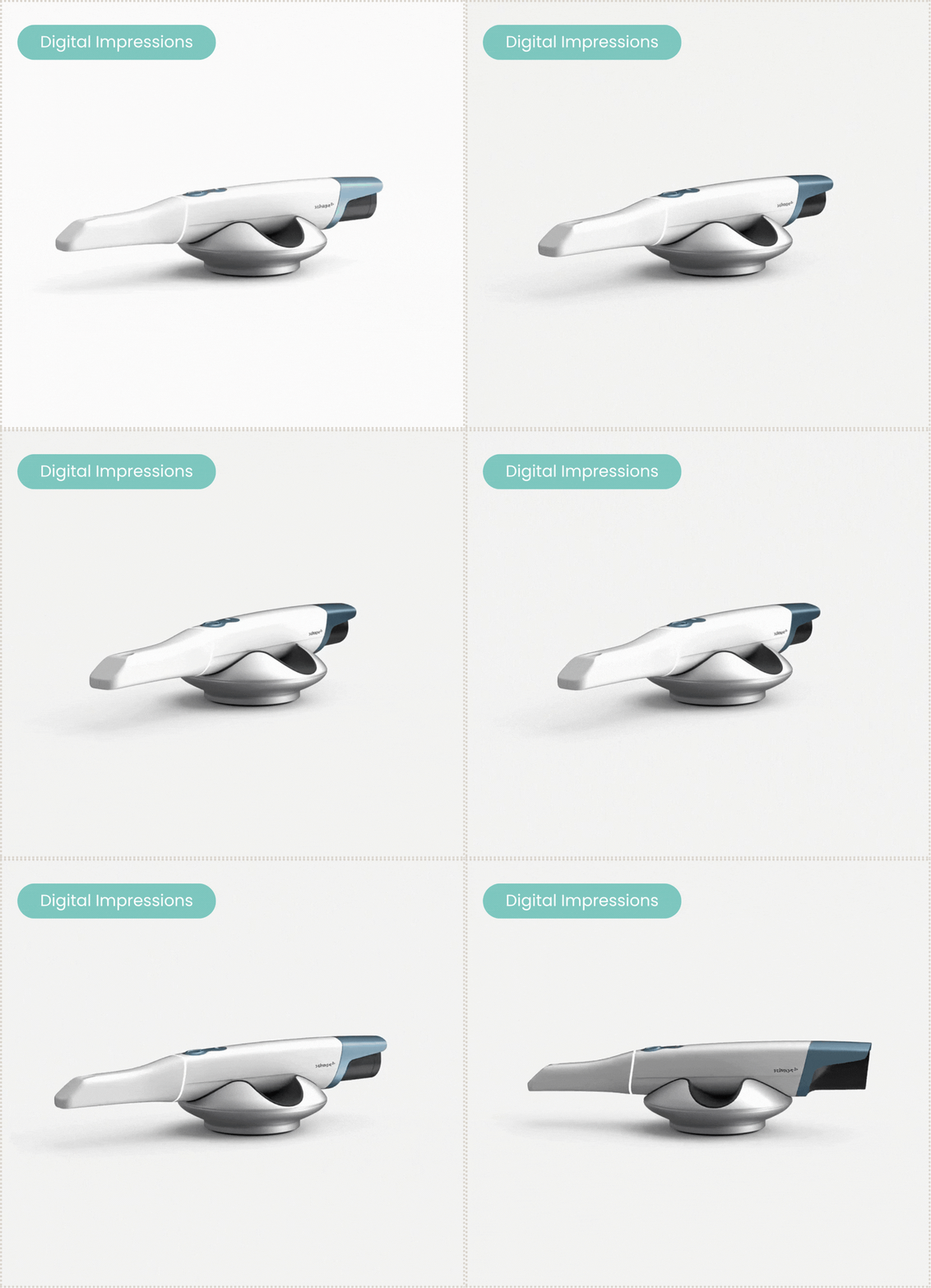
DIGITAL DENTAL SCANNING
A Detailed View of Your
Teeth and Gums
A handheld intraoral scanner captures digital impressions of the visible surfaces of your teeth and gums. The resulting digital model can support certain dental treatments and restoration workflows.
Captures surface details in a digital format
Provides records that may support treatment planning
Creates a visual reference for discussions with your team
Digital scanning can be an alternative to physical impressions for some treatments. Your dentist will explain which approach is appropriate for you.
3D DENTAL IMAGING
More Information When Your Care Calls for It
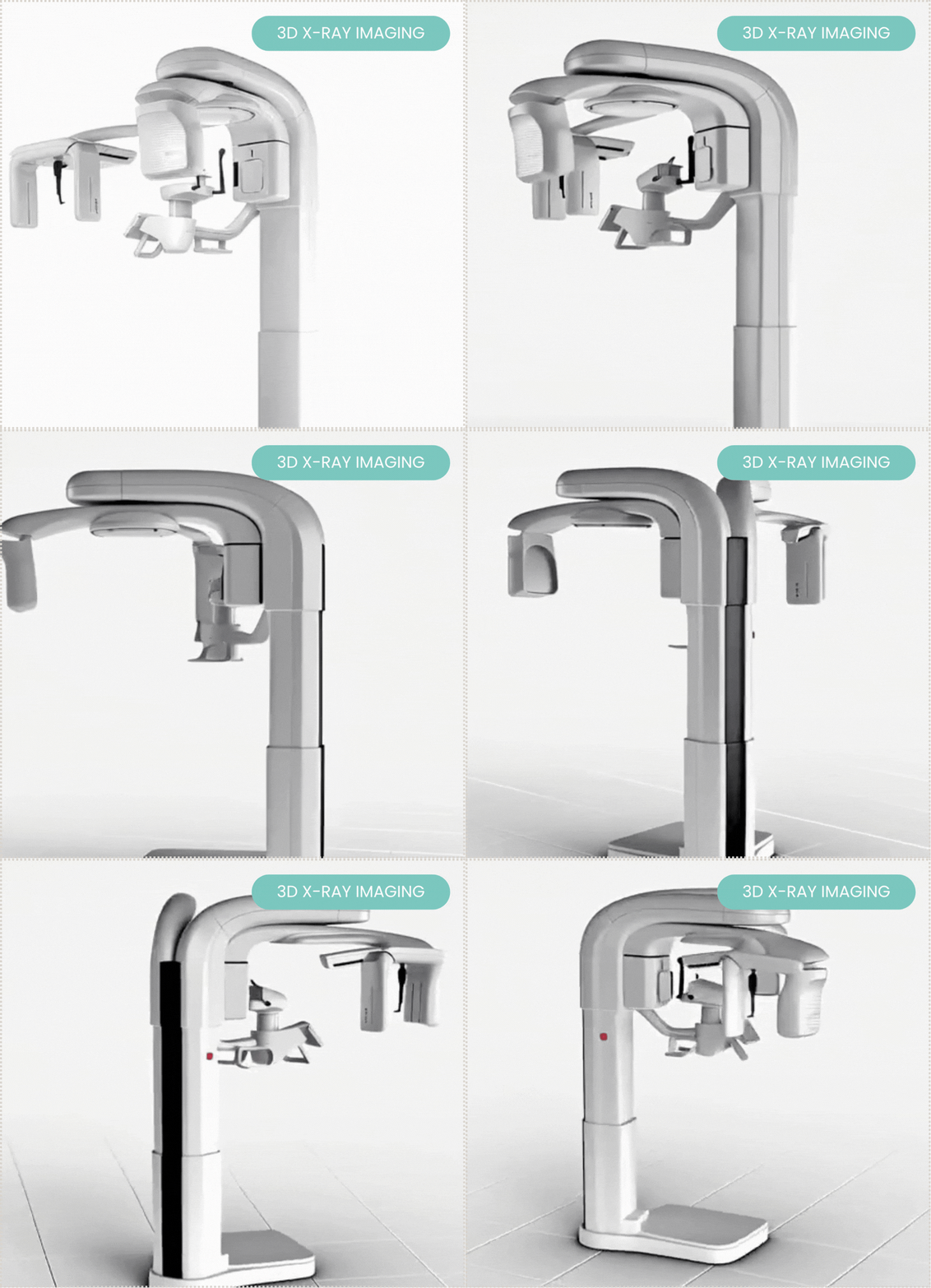
Cone beam computed tomography, or CBCT, uses X-rays to create three-dimensional images of oral structures. When clinically appropriate, these images can help your dentist evaluate the jawbone and surrounding anatomy.
For some treatment plans, including certain implant evaluations, this additional information may help the team assess the structures relevant to your care.
Provides a three-dimensional view of oral anatomy
May help assess jawbone and surrounding structures
Supports planning when additional imaging is indicated
CBCT is not needed for every patient or every visit. Your dentist will explain why imaging is recommended for your situation.
Digital scan: surface details
A digital impression records the visible surfaces of teeth and gums.
CBCT: oral structures in 3D
X-ray imaging provides a different view, including information about the jawbone.
A CLOSER LOOK AT YOUR CARE
Two Tools. Different Perspectives.
Digital scanning and 3D imaging gather different kinds of information. Your dentist determines when each may be useful.
DIGITAL DENTAL SCANNING
A Detailed View of Your Teeth and Gums
A handheld intraoral scanner captures digital impressions of the visible surfaces of your teeth and gums. The resulting digital model can support certain dental treatments and restoration workflows.
Captures surface details in a digital format
Provides records that may support treatment planning
Creates a visual reference for discussions with your team
Digital scanning can be an alternative to physical impressions for some treatments. Your dentist will explain which approach is appropriate for you.
3D DENTAL IMAGING
More Information When Your Care Calls for It
Cone beam computed tomography, or CBCT, uses X-rays to create three-dimensional images of oral structures. When clinically appropriate, these images can help your dentist evaluate the jawbone and surrounding anatomy.
For some treatment plans, including certain implant evaluations, this additional information may help the team assess the structures relevant to your care.
Provides a three-dimensional view of oral anatomy
May help assess jawbone and surrounding structures
Supports planning when additional imaging is indicated
CBCT is not needed for every patient or every visit. Your dentist will explain why imaging is recommended for your situation.
Digital scan: surface details
A digital impression records the visible surfaces of teeth and gums.
CBCT: oral structures in 3D
X-ray imaging provides a different view, including information about the jawbone.
A CLOSER LOOK AT YOUR CARE
Two Tools. Different Perspectives.
Digital scanning and 3D imaging gather different kinds of information. Your dentist determines when each may be useful.
Digital scanning can be an alternative to physical impressions for some treatments. Your dentist will explain which approach is appropriate for you.
DIGITAL DENTAL SCANNING
A Detailed View of Your
Teeth and Gums
A handheld intraoral scanner captures digital impressions of the visible surfaces of your teeth and gums. The resulting digital model can support certain dental treatments and restoration workflows.
Captures surface details in a digital format
Provides records that may support treatment
planning.
Creates a visual reference for discussions with your
team
3D DENTAL IMAGING
More Information When Your Care Calls for It
Cone beam computed tomography, or CBCT, uses X-rays to create three-dimensional images of oral structures. When clinically appropriate, these images can help your dentist evaluate the jawbone and surrounding anatomy.
For some treatment plans, including certain implant evaluations, this additional information may help the team assess the structures relevant to your care.
Provides a three-dimensional view of oral
anatomy
May help assess jawbone and surrounding
structures
Supports planning when additional imaging is
indicated
CBCT is not needed for every patient or every visit. Your dentist will explain why imaging is recommended for your situation.
Digital scan: surface details
A digital impression records the visible surfaces of teeth and gums.
CBCT: oral structures in 3D
X-ray imaging provides a different view, including information about the jawbone.
MEET TRUCARE DENTAL
Real People. Personalized Care.
Meet Dr. Andrea Patterson at TruCare Dental in Albuquerque. Learn how digital scans and imaging may support your evaluation and discuss what the findings mean for your individual care.

Dr. Andrea Patterson
MEET TRUCARE DENTAL
Real People. Personalized Care.
Meet Dr. Andrea Patterson at TruCare Dental in Albuquerque. Learn how digital scans and imaging may support your evaluation, and discuss what the findings mean for your individual care.
Dr. Andrea Patterson
MEET TRUCARE DENTAL
Real People. Personalized Care.
Meet Dr. Andrea Patterson at TruCare Dental in Albuquerque. Learn how digital scans and imaging may support your evaluation, and discuss what the findings mean for your individual care.
Dr. Andrea Patterson
WHAT THIS MEANS FOR YOU
Information You Can Understand.
Care You Can Discuss.
Digital tools can support your team and give you a clearer starting point for questions.

Detailed Information
Digital records can help your dental team examine your mouth and consider the information relevant to your care.

Clearer Conversations
Seeing scans or images with your dentist can make it easier to discuss findings and ask questions.

Planning Around Your Needs
Your examination, health history and digital records work together to inform appropriate next steps.
WHAT THIS MEANS FOR YOU
Information You Can Understand.
Care You Can Discuss.
Digital tools can support your team and give you a clearer starting point for questions.
Detailed Information
Digital records can help your dental team examine your mouth and consider the information relevant to your care.
Clearer Conversations
Seeing scans or images with your dentist can make it easier to discuss findings and ask questions.
Planning Around Your Needs
Your examination, health history and digital records work together to inform appropriate next steps.
FROM QUESTIONS TO NEXT STEPS
How Technology Fits Into Your Care
Every visit starts with you. Scans and imaging are selected according to the needs identified during your evaluation.
01
Start With a Conversation
Discuss your concerns, dental and medical history, and what you hope to achieve.
02
Gather Records When Needed
Your dentist determines whether digital scans, X-rays or other assessments would be helpful.
03
Review the Findings
Talk through the available information and the treatment options appropriate for your situation.
04
Understand Your Next Step
Ask questions about the recommended approach, timing and ongoing care before making a decision.
A LITTLE CLARITY BEFORE YOUR VISIT
Your Questions, Answered.
Start here, then bring your own questions to our dental team.
What is a digital dental scan?
An intraoral scanner captures a digital impression of the visible surfaces of your teeth and gums. This record can support certain treatment-planning and restoration workflows.
How is digital scanning different from 3D X-ray imaging?
A digital intraoral scan records surface information. CBCT uses X-rays to produce three-dimensional images of oral structures, including the jawbone. The two tools provide different information and do not automatically replace one another.
Will I need both a scan and 3D imaging?
Not necessarily. Your dentist will recommend assessments according to your symptoms, examination, history and treatment needs. Not every visit or treatment requires CBCT imaging.
Does digital scanning replace traditional impressions?
Digital scans can be used instead of physical impressions for some treatments. Your dental team will explain which method is suitable for your particular case.
Is digital technology only used for implants?
No. Digital scans may support a range of dental treatments and restoration workflows. The tools used depend on the treatment being considered and the equipment and workflows available at the office.
Does technology make treatment decisions?
Your dentist evaluates the information, considers your oral and overall health, and discusses appropriate recommendations with you. Technology supports that process; it does not replace an examination or professional judgment.
Can I discuss my options before deciding on treatment?
Yes. An evaluation is an opportunity to share concerns, understand the findings and ask about your options. Requesting an appointment does not commit you to a particular treatment.
YOUR NEXT STEP
Let's Talk About
Your Dental Care
Have questions about your oral health or how digital dentistry may fit into your care? Start by requesting an appointment with the TruCare team.
Share your contact details and preferred office.
Let the team know what you would like help with.
The office can contact you about availability and next steps.
YOUR NEXT STEP
Let's Talk About
Your Dental Care
Have questions about your oral health or how digital dentistry may fit into your care? Start by requesting an appointment with the TruCare team.
Share your contact details and preferred
office.
Let the team know what you would like help
with.
The office can contact you about availability
and next steps.
MODERN TOOLS. A PERSONAL CONVERSATION
Your Care Starts With
Understanding Your Needs
Meet with the TruCare team to discuss your concerns, explore appropriate options and understand your next step.
Your dentist determines which assessments are appropriate for your care.
MODERN TOOLS. A PERSONAL CONVERSATION
Your Care Starts With
Understanding Your Needs
Meet with the TruCare team to discuss your concerns, explore appropriate options and understand your next step.
Your dentist determines which assessments are appropriate for your care.
MODERN TOOLS. A PERSONAL CONVERSATION
Your Care Starts With
Understanding Your Needs
Meet with the TruCare team to discuss your concerns, explore appropriate options and understand your next step.
Your dentist determines which assessments are appropriate for your care.
505-369-0074
Modern Dental Technology
505-369-0074
Modern Dental Technology
505-369-0074
Modern Dental Technology